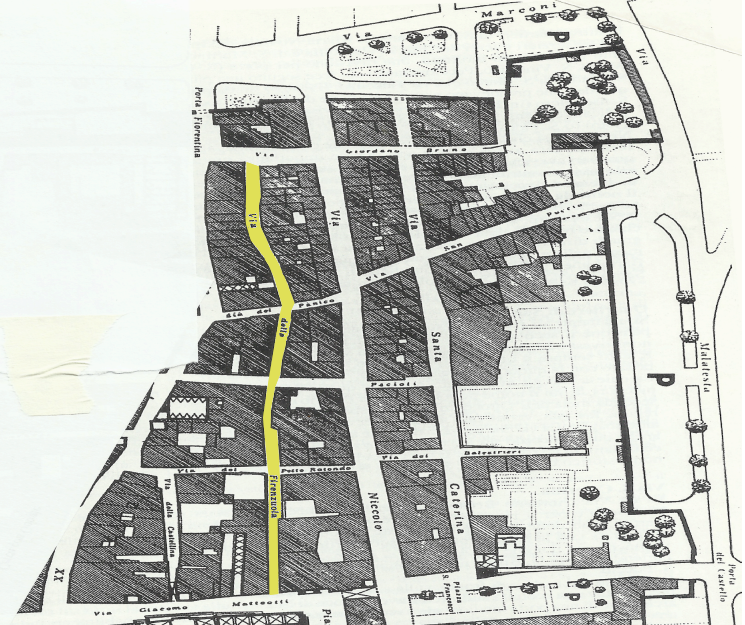
Renamed: from via Firenzuola to via Giulia Boninsegni
On 17 March 2016 the municipal council decided to change the name of the first stretch of the ancient street, via Firenzuola, the one between via Matteotti and Via Luca Pacioli, to via Giulia Boninsegna Buitoni, situated near the historic headquarters of Buitoni which has become a museum. Aside from the questionable choice of changing the name of one of the oldest streets in the village, the decision arose to support the project of the Buitoni pasta factory workers' recreation club to create a museum in the premises along that stretch of road. It was there that in the 1870s the pasta factory laboratory was transferred and the industrial development of the Buitoni company began, (which in a century would become famous throughout the world).
With the naming of the street after the founder's wife, who played an important role in the first artisanal phase of the pasta factory, Giulia Boninsigni's hagiography was strengthened. Giampaolo Gallo published the book in 1990 “On everyone's lips”, which was fundamental for reconstructing the history of the pasta factory, and was followed by other studies, which highlighted the legends but without historical foundation.
In fact, the company's jubilee literature, starting from the celebrations of the 110th anniversary, exalts the figure of grandmother Giulia as the founder of the company and architect of its success together with her son Giovanni. This does not mean however that the Buitoni amplified female figures in their work practice. On 24 September 1886 the Giovanni and Fratelli Buitoni company transformed into a general partnership, the rules of family management of the factories were established, introducing the distinction between partners and with the same act, women were excluded from the control and management of the company . From then on, female work at Buitoni became merely synonymous with exploitation and low wages.
Who was Giulia Boninsigni
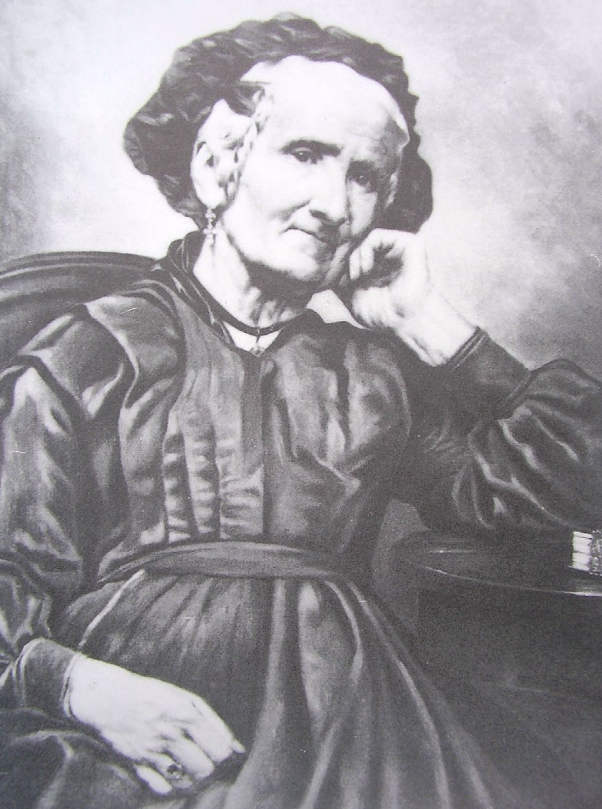
Fig. 1 – Giulia Boninsegni (1791-1877)
Maria Giulia Santa Boninsegna di Giovanni of the late Simone and of Donna Maria Anna of the late Girolamo Pacchi was born in Sansepolcro on 19 December 1791 and two days later she was baptized in the Cathedral by the priest Francesco Valori. In the same church on 2 December 1820 the almost twenty-nine year old Giulia, a weaver by trade, married the fifty-one year old barber Giovanni Battista Buitoni, son of the late Marco and Orsola Cirignoni. Paolo Savelli and a nobleman Tommaso Venturi acted as witnesses. The presence of a nobleman already indicated the good social integration of Buitoni who was already a small landowner. In 1825, in addition to owning the house, Giovanni Battista Buitoni was the owner of two plots of land of approximately one hectare each, both classified in the land register as «Working poplar vineyard»: one not far from the center of the town along the Petreto ditch and the other in the Palazzolo di Gricignano area.
On 15 July 1828 the Buitoni couple rented the small pasta factory of Antonio Betti, a Florentine who had this laboratory in Palazzo Pichi, in the town square. It was an artisanal activity like many others that were spreading across the Italian peninsula following the affirmation of pasta in eating habits, as a substitute food capable of filling the bellies of the poorest classes in a period of demographic increase. And from the multiplication of the shops arose the formation of a class of artisans specialized in the production of dried pasta, which would constitute that sediment of technical experiences and vocations on which the Italian pasta industry would be based from the mid-nineteenth century (see . De Bernardi) and also the Buitoni factory in Sansepolcro.
A century later the Buitoni pasta factory, in the hands of his grandchildren, had become a successful company with projections on the international market. Despite the absence of documentation and the testimonies based on fleeting memories, the company hypothesized that it was founded in 1827. The passage of the pasta factory to Perugian branch of the family was in 1927 and the re-foundation of the company actually took place on that occasion" (see Chiapparino). In the jubilee tradition of the Buitoni pasta factory everything was stated as having began with the sacrifice of grandmother Giulia who, to give a future to her numerous children, pawned a piece of coral, of which however there is no trace of real evidence in the Sansepolcro archives. Regardless of the truthfulness of the fact and the value of the necklace, Giovanni Battista certainly mortgaged the two plots of land he owned in favor of Antonio Betti.
An element of truth is that the Buitoni family was growing: Giovanni († 1901) was born in 1822, Marco († 1893) was born in 1824 and Beatrice († 1854) was born in 1827. Then in 1829 Giuseppe († 1901) was born, in 1831 Nazzareno († 1900) and in 1834 Luigi († 1887). When Giovanni Battista died in 1841, Giulia had to take care of her five children, of whom the eldest was only nineteen. However, it was the eldest son Giovanni who took over the management of the small pasta factory in the square. Giulia supported him but she certainly remained in the background as was appropriate in a society with a patriarchal structure where the role of the woman was to take care of the domestic chores and take care of the men of the house. In fact, it is said of Giulia that she managed «a small canteen for the workers, which she looked after personally in a room specially created in the house in via Firenzuola», where the pasta factory activity moved to in the 1970s. In fact, when Giulia Boninsegna with her husband Giovanni Battista Buitoni started their pasta business, they lived in a portion of the sixteenth-century Palazzo Muglioni, a medieval noble house, on the corner of what was then via Firenzuola and via Pettorotondo. The house was on four floors and was made up of thirteen rooms which by the end of the century had become sixteen, as the family, as mentioned, had also grown. At that time the palace still largely belonged to the knight. Michelangelo Muglioni Cungi and on the opposite side of the Buitoni house (corner of the current Via Addinti and Via Pacioli) also incorporated the family church (church of S. Pierino, formerly San Pietro in Civitella) with an adjacent vegetable garden along the current Via Pacioli . To complete the property there were two other portions owned by Isabella Rondinelli Vitelli, wife of Luigi Boncompagni Ludovisi.
The 1870s and 1880s were the years in which the Buitoni family acquired other portions of Palazzo Muglioni, those in the central part of the property: a first catastal record records the date of 10 January 1879, A second portion was purchased on October 20, 1886. In these years, the laboratory was moved to the ground floor, although this use will not appear at the cadastre, which is instead documented in the archives and, on the spot, by the physical remains of the factory. In addition, the Buitoni also took possession of the portion of the palace in Via Barbagliati ang. S. Pierino a Firenzuola» (today via Pacioli corner via Boninsegni), which was sold on 21 August 1920. In the same years the Buitoni sold a part of the central body of the palace to the Province of Arezzo that will be destined to barracks of the Carabinieri.
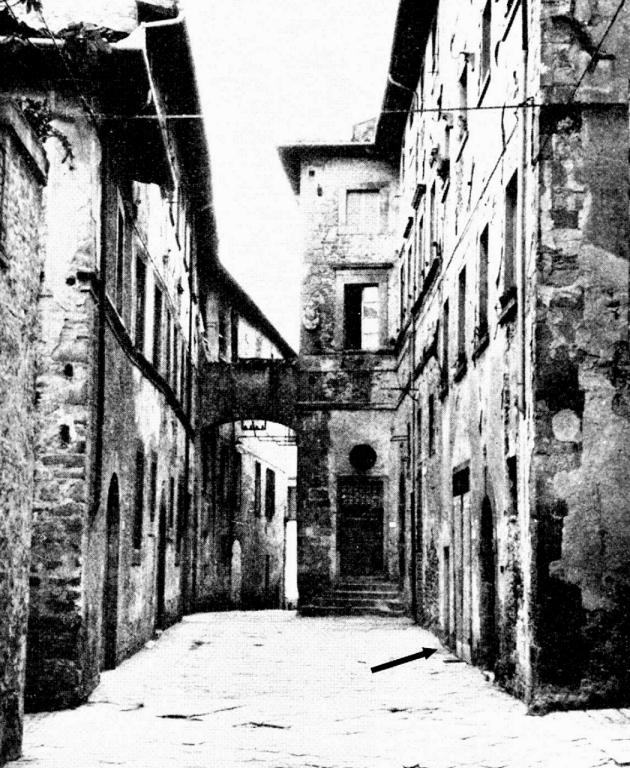
Fig. 2 – Buitoni laboratory in via Firenzuola (on the ground floor indicated by the arrow)
It was in the second half of the nineteenth century that the Buitoni brothers' pasta factory progressively developed, expanding with branches first in Città di Castello (1854) and then in Perugia (1878), The brothers opened a mechanical workshop in Porta Romana in Sansepolcro (1874) with three other partners for the rental, sale, repair and construction of agricultural machinery. They also purchased the ancient hydraulic mill of San Leo alla Caduta just outside Porta del Castello in Sansepolcro (1879) and installed a modern one next to its cylinder mill (1882), also installing a steam machine in via Firenzuola to mechanize the production processes in the manufacture of pasta, patenting gluten-free pasta (1889) and thus entering the world of dietary products. But above all, in these last decades of the century, the Buitoni’s capitalized on the substantial flour and wholesale product trading activity of the shop in the square and the significant credit they exercised towards their fellow citizens. They thus broadened their interests in all areas of the local economy and also gained greater social importance by becoming part of the local agrarian class with the purchase, in 1882, from the State of more than 95 hectares of land in the ecclesiastical axis. After the death of her husband, Giulia Boninsegna Buitoni was able to appreciate the work of her children and watch with admiration the growth of the pasta factory of which her eldest son Giovanni was the creator. Mother Giulia died at the age of eighty-five on the morning of February 25, 1877. She was ill, but death struck her suddenly.
Along the road
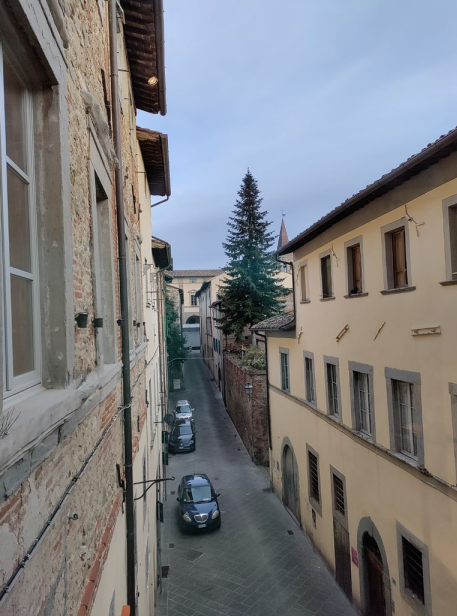
Fig. 3 – Via Giulia Boninsegni From palazzo Muglioni, febbraio 2023
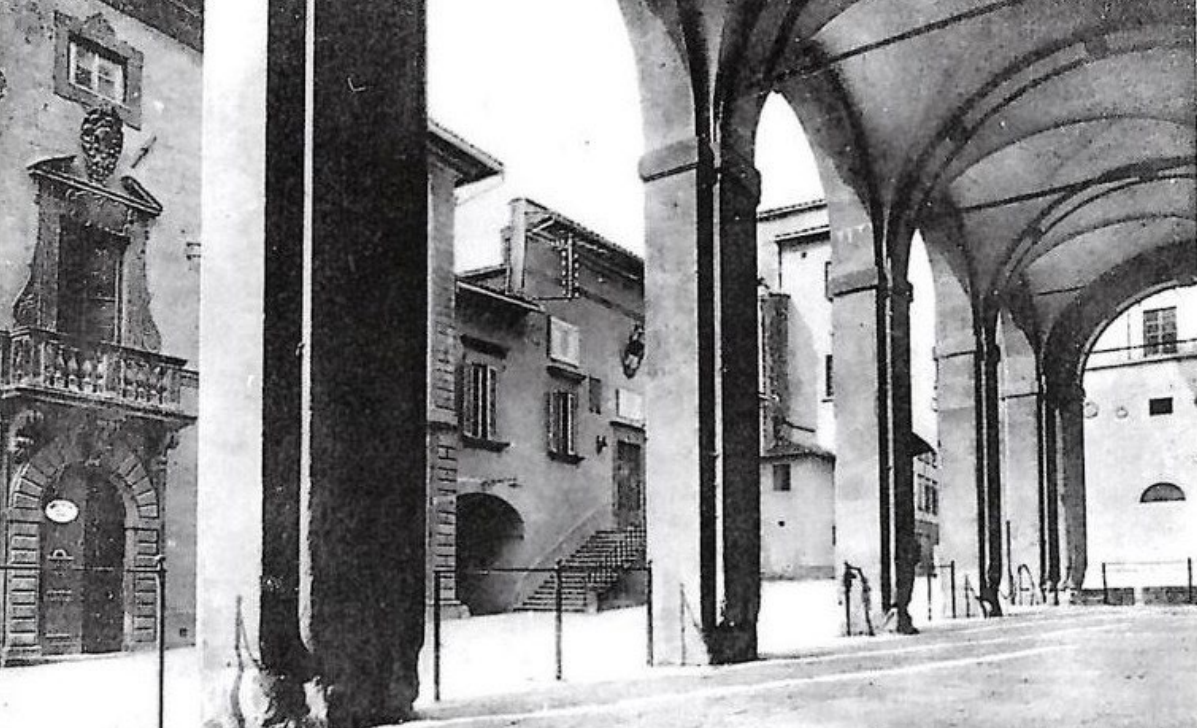
Fig. 4 – Arch at the beginning of via Firenzuola (today via Giulia Boninsegni)
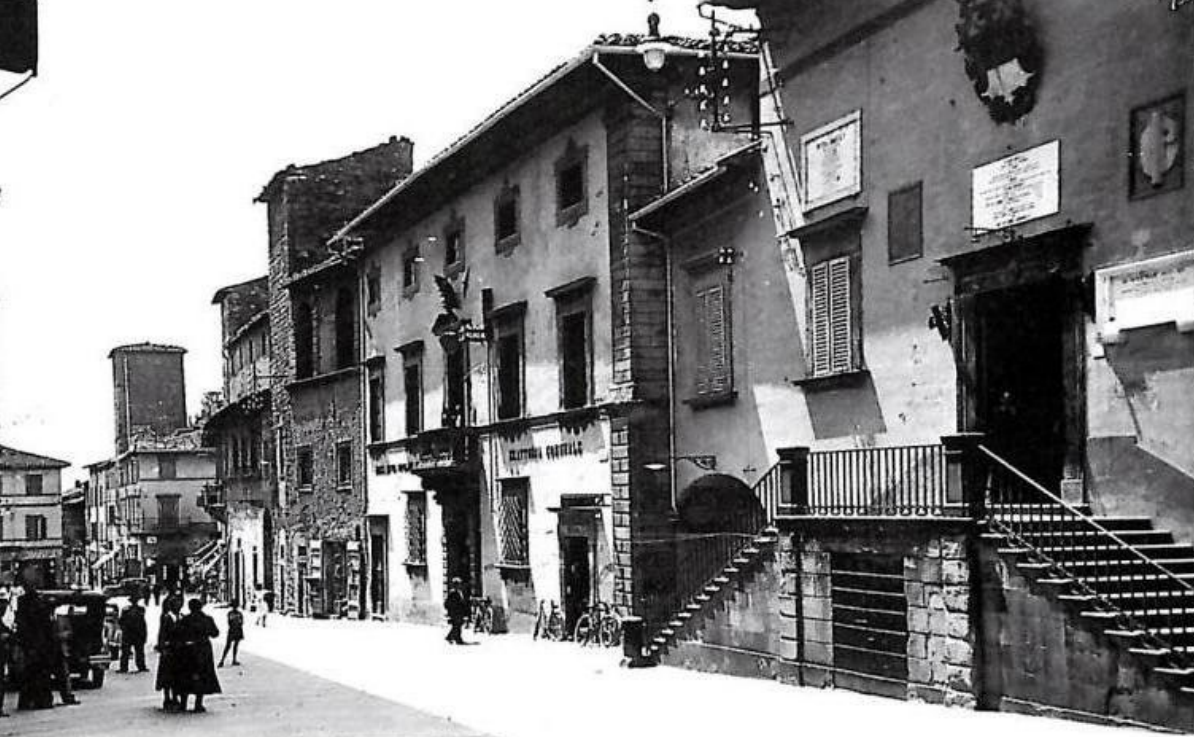
Fig. 5 – Arch at the beginning of via Firenzuola (today via Giulia Boninsegni)
Via Giulia Boninsegni Buitoni begins in front of the Palazzo della Compagnia delle Laudi (now the town hall) and from there, via Giacomo Matteotti, reaches via Luca Pacioli where, after crossing it, it takes on its ancient name of via Firenzuola. Until the 1960s, the entrance to this street was under an arch that supported the Town Hall or Residence Palace (now home to the civic museum) on the Aggiunti Palace.
After passing the walls of these buildings, whose accesses are respectively from Via Addinti and Via Matteotti, you cross Via del Pettorotondo and find yourself at the back of Palazzo Muglioni, where a marble slab is affixed which reads: "FROM HERE TO ALL THE WORLD / ON THE DAY OF THE INAUGURATION OF BUITONI WHICH CONFIRMS THE CONTINUITY OF AN INDUSTRIAL PRESENCE IN THE CITY OF SANSEPOLCRO IN MEMORY OF WHERE GIULIA BONINSEGNI AND GIO BATTA BUITONI BEGAN THEIR PASTA PRODUCTION ACTIVITY IN 1827 . SANSEPOLCRO 13 OCTOBER 1992".
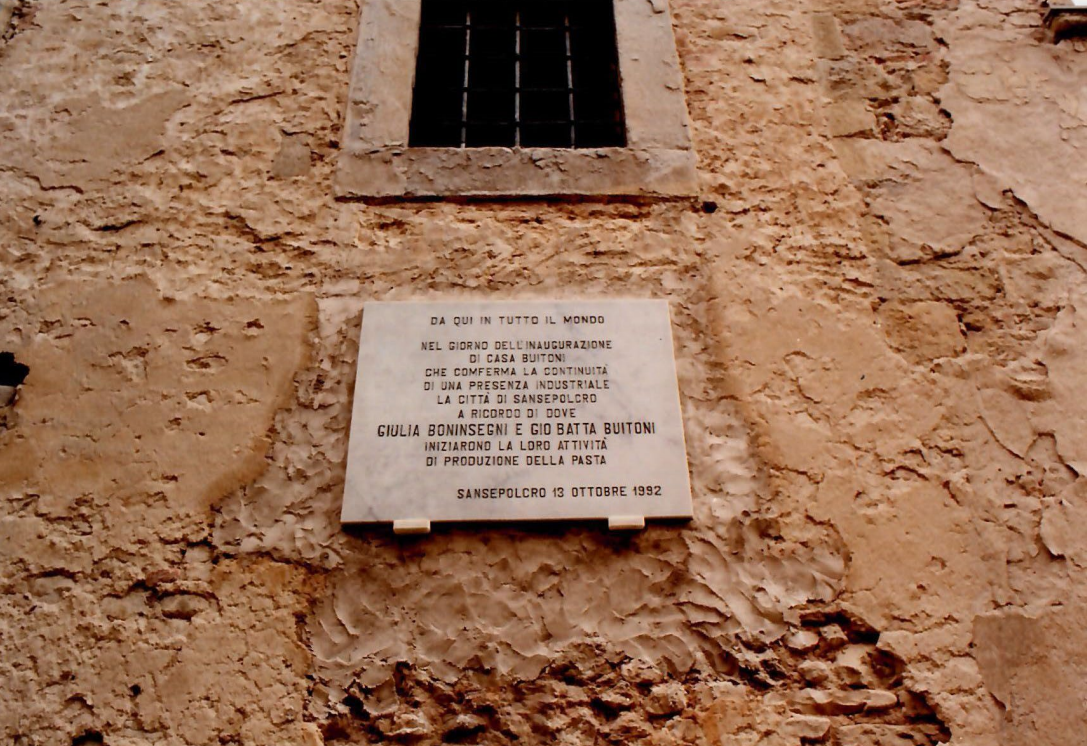
Fig. 6 – Plaque on the wall of Palazzo Muglioni placed on 13 October 1992
The presence of this plaque reminds us that the industrialization of Sansepolcro began in those rooms overlooking the street and that the name of the city and of Buitoni pasta was carried "From here all over the world" throughout the twentieth century. Apart from the historical inaccuracies (date and place of the start of the activity), the placing of the commemorative plaque in the presence of the mayor Luigino Sarti, the municipal council and the managers of the Swiss multinational Nestlé had the aim of involving the new owner of Buitoni in the city reality.
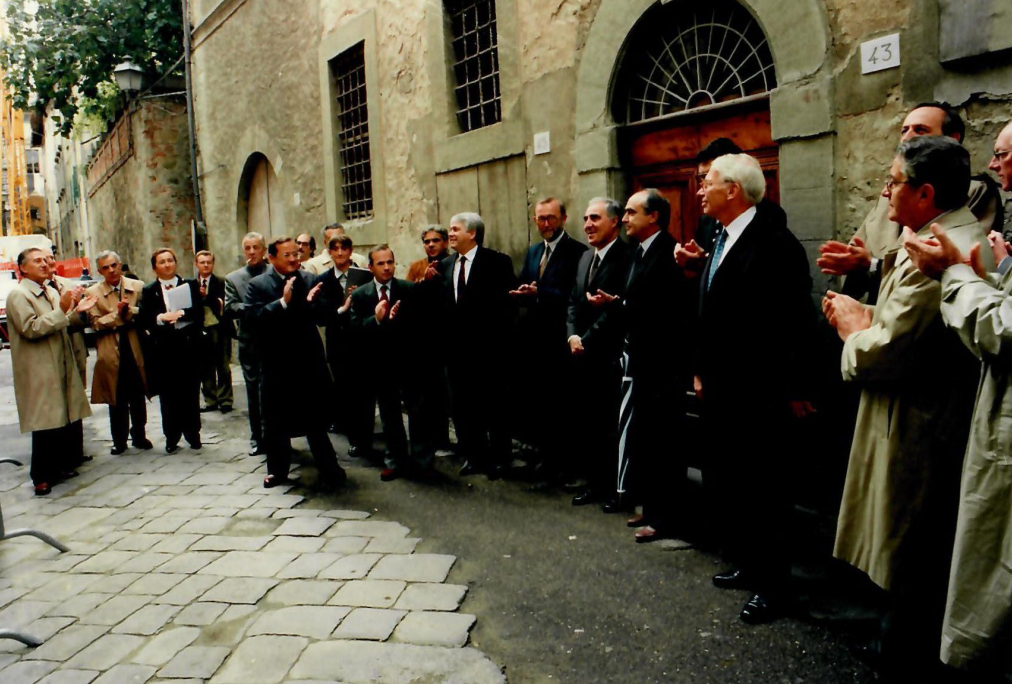
Fig. 7 – Unveiling of the plaque on Palazzo Muglioni, 13 October 1992
Nestlé had purchased Buitoni in 1988, after the company's crisis had caused Sansepolcro to lose hundreds of jobs and put at risk the very presence of the company which for over a century had built the economic and social culture of the city. Nestlé attempted to change the hard business from 'Mediterranean cuisine to Healthy cuisine' and from this perspective identified that image in Villa Paradiso, positioned on the hills of Sansepolcro - a villa to certify the Italian authenticity of the brand throughout the world. Thus, in 1992, Villa Paradiso became Casa Buitoni, a food research center and a public relations venue for the Nestlé group. Through the Casa Buitoni experiments, Nestlé wanted to sell freeze-dried cooked pasta, but success only came with frozen pizzas. The market shares of Buitoni products decreased considerably and in 2008 Buitoni pasta left large-scale distribution because Nestlé, to maximize profits, reduced production and allocated the industrial plants to third-party production. While retaining the Buitoni brand, Nestlé sold the production of dried pasta and rusks to the TMT Group of Lugano, led by Angelo Mastrolia. A new chapter opened up for the Sansepolcro pasta factory, but by then the city and factory were no longer identifiable with the name Buitoni, The end of the Buitoni-Sansepolcro combination, came in 2017 when Nestlé also closed Casa Buitoni, dissolving the image of the nineteenth-century villa from the Butioni brand and divesting the experimental kitchens by transferring them to the USA and Germany. The epilogue occurred when, at the end of 2022, Nestlé did not renew the concession to produce for the Mastrolia company pasta with the Buitoni brand (but retaining ownership) and so the branding from the Sansepolcro factory also disappeared.
Sansepolcro for almost two centuries dominates only in the sports field, today "Comunale Buitoni", which the company built for recreational activities and was inaugurated in 1933. For the rest we can read the name of the Buitoni’s in the streets of the historic center, such as those named after Giulia Boninsegni Buitoni and her son Giovanni, and in the epigraph of the monument dedicated to him; while in the industrial area we find via Marco Buitoni, who was managing director of the Sansepolcro plant from 1927.
Claudio Cherubini
Fonti:
- Archivio di Stato di Arezzo, Catasto Geometrico-particellare del Granducato di Toscana e Catasto delle Imposte Dirette, comune di Sansepolcro.
- Archivio Storico Diocesano di Sansepolcro: Libro dei battesimi della parrocchia della Cattedrale dal 1764 al 1800; Registro di Matrimoni dal 7 Gennaio 1818 al 30 Aprile 1829, Parrocchia della Cattedrale, VII 22; Comunità di Borgo S. Sepolcro, Parrocchia di S. Sepolcro Cattedrale, Stato delle anime della detta parrocchia, «Compilato nel Mese di Aprile all’Anno 1841 dall’infrascritto parroco in esecuzione delle Sovrane disposizioni contenute nel Biglietto della R. Segreteria di Stato de’ 12 Novembre 1840»; Registro dei Morti dal 1866 al 1908. Primo Registro degli atti dei Morti in Cura Cattedrale di San Sepolcro dall’anno 1866 all’anno 1905, IV 4; Archivio Vescovile, Sezione Vescovi, Serie Pompeo Ghezzi, busta 1, fasciolo 21.
- C. CHERUBINI, Buitoni, luci e ombre. La parabola del pastificio di Sansepolcro, in Il pastificio Buitonil pastificio Buitoni. Sviluppo e declino di un’industria italiana (1827-2017), a cura di C. Cherubini, prefazione di Ivo Biagianti, atti delle conferenze di Sansepolcro, 8-28 ottobre 2017, Roma, Nova Delphi (“Academia”), 2021.
- C. CHERUBINI, Cronologia, in Il pastificio Buitoni. Sviluppo e declino di un’industria italiana (1827-2017), a cura di C. Cherubini, prefazione di I. Biagianti, atti delle conferenze di Sansepolcro, 8-28 ottobre 2017, Roma, Nova Delphi (“Academia”), 2021.
- C. CHERUBINI, Gli ultimi anni del pastificio di Sansepolcro: dalla Buitoni alla Nestlé, “Annali Aretini”, XXV, 2017.
- C. CHERUBINI, Sansepolcro e Buitoni: una città-fabbrica, in Il futuro altrove. Lavoro e transizioni novecentesche nel territorio aretino, a cura di G. Sacchetti, Società Storica Aretina (Studi di Storia aretina, 19), Arezzo, 2022.
- C. CHERUBINI, Una storia in disparte. Il lavoro delle donne e la prima industrializzazione a Sansepolcro e in Valtiberina toscana, Istituzione culturale Biblioteca Museo Archivi storici Città di Sansepolcro – Editrice Pliniana (Fonti, 4), Sansepolcro – Selci Lama, 2016.
- C. CHERUBINI, Un ricco emigrante: Luigi Fatti, “Pagine Altotiberine”, XXV, 70, 2021.
- F. CHIAPPARINO – R. COVINO, La fabbrica di Perugia. Perugina 1907-2007, ICSIM-Comune di Perugia, Perugia, 2008.
- F. CHIAPPARINO, Famiglia e impresa: il pastificio. Buitoni di Sansepolcro tra Ottocento e primo Novecento, “Proposte e ricerche”, 44, 2000.
- M. D. CHIELI, Un’antica industria… nella terra di Piero, Ufficio P. R. della S.p.A. Gio. & F.lli Buitoni, Sansepolcro, 1963.
- F. CHIELI, Conoscere Sansepolcro. Arte e storia nella città di Piero della Francesca e Luca Pacioli, Edizioni Nuova Prhomos, Città di Castello, 2021.
- R. COVINO, «Da qui… in tutto il mondo». Dalla diffusione del marchio Buitoni alla prima industria alimentare più importante al mondo, in Il pastificio Buitoni. Sviluppo e declino di un’industria italiana (1827-2017), a cura di C. Cherubini, prefazione di I. Biagianti, atti delle conferenze di Sansepolcro, 8-28 ottobre 2017, Roma, Nova Delphi (“Academia”), 2021.
- A. DE BERNARDI, Il paese dei maccheroni. Storia sociale della pasta, Donzelli (Saggi. Storia e scienze sociali), Roma, 2019.
- C. DEL FURIA, Il pastificio Buitoni a Sansepolcro dal 1828 al 1923: sviluppo imprenditoriale e dinamiche familiari, Tesi di laurea, Università degli Studi di Perugia, Facoltà di Lettere e Filosofia, relatore Renato Covino, a. a. 1996-1997, conservata presso l’Archivio Storico Diocesano di Sansepolcro.
- G. GALLO, Dagli esordi alla seconda guerra mondiale, in “Sulla bocca di tutti”. Buitoni e Perugina una storia in breve, a cura di G. Gallo, Electa Editori Umbri, Perugia, 1990.
- Il futuro altrove. Lavoro e transazioni novecentesche nel territorio aretino, a cura di G. Sacchetti, Società Storica Aretina (Studi di Storia aretina, 19), Arezzo, 2022.
- Il pastificio Buitoni. Sviluppo e declino di un’industria italiana (1827-2017), a cura di C. Cherubini, prefazione di Ivo Biagianti, atti delle conferenze di Sansepolcro, 8-28 ottobre 2017, Roma, Nova Delphi (“Academia”), 2021.
- L. MASIA, Buitoni. La famiglia, gli uomini, le imprese, Silvana Editoriale-Volumnia, Cinisello Balsamo-Perugia 2007.
- E. MATTESINI, Toponimastica borghese. Nomi di strade, piazze e spazi urbani e nomi di luogo del Comune di Borgo Sansepolcro (Arezzo), Petruzzi Editore, Città di Castello, 2023.
- F. POLCRI, CRAL Buitoni, s. e., Sansepolcro, 1985.
- A. TAFI, Immagine di Borgo Sansepolcro. Guida storico-artistica della Città di Piero della Francesca, Calosci, Cortona, 1994.
- C. REPEK, Sansepolcro e la Buitoni tra ‘800 e ‘900, La nostra storia. Lezioni sulla storia di Sansepolcro. Età contemporanea, vol. IV, a cura di A. Czortek, Atti della conferenze (Sansepolcro, ottobre/dicembre 2011-marzo/aprile 2021), Gruppo Graficonsul, Sansepolcro, 2013.
- “Sulla bocca di tutti”. Buitoni e Perugina una storia in breve, a cura di G. Gallo, Electa Editori Umbri, Perugia, 1990.