PIAZZETTA DI SANTA MARTA
Home »
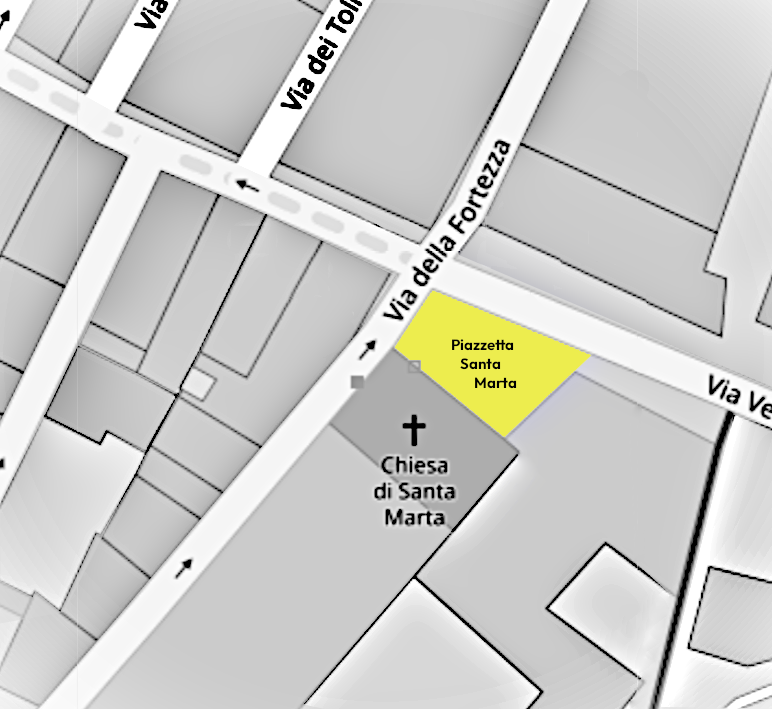
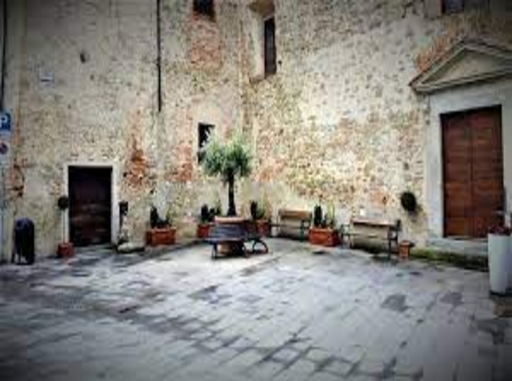
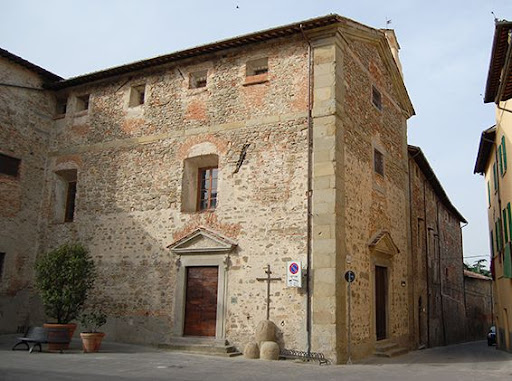
Fig. 1 e 2 – Little square of Santa Marta and side entrance of the church
The small square of Santa Marta, where the two entrances to the church are located, is a small, friendly and quiet space. The church is the work of the architect Antonio Cantagallina (17th century); it has no pretensions but preserves significant works, from a large seventeenth-century wooden crucifix, placed on the main altar in baroque style. On the right, the Cantagallina altar from the first half of the century. XVII – work by G. Battista Temperi – supports a Madonna with Child and Saints, painted terracotta from the XV1 century. The Madonna, with hands clasped with the child in her lap, recalls the Madonna of Senigallia by Piero della Francesca. In front, the Nomi-Pannilunghi altar, by Temperi (1622), supports a painting with the Madonna, Saint Francis and Saint John the Evangelist at the foot of the cross, an anonymous work from the 15th-16th century. It seems to belong to a primitive chapel incorporated in the 17th century.
Nearby we read the name of Matteo Lancisi, from 1652. A very particular work are the two processional banners, one with the image of Saint Mary Magdalene and an expression of the Confraternity dedicated to her, the work of Spinello from Arezzo; the other with the image of Saint Catherine of Alexandria, by Pietro di Giovanni d'Ambrogio.2
1FRANCESCA CHIELI, Conoscere Sansepolcro – Arte e Storia, Ed. Nuova Prhomos, 2021.
2NICOLETTA COSMI, GLI STENDARDI “RITROVATI” delle Confraternite di S. Maria Maddalena e S. Caterina di Borgo San Sepolcro (secc. XIV-XV), Digital Editor srl, Umbertide, 2019.
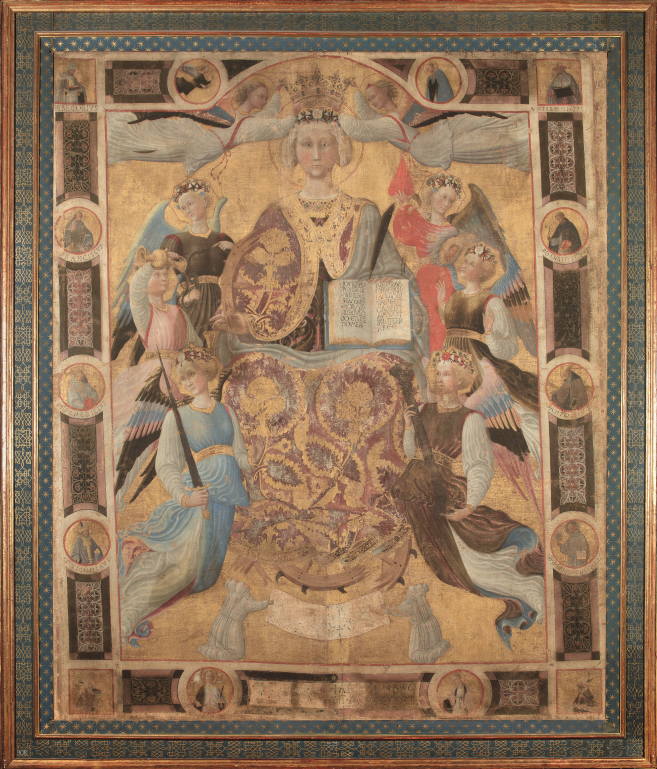
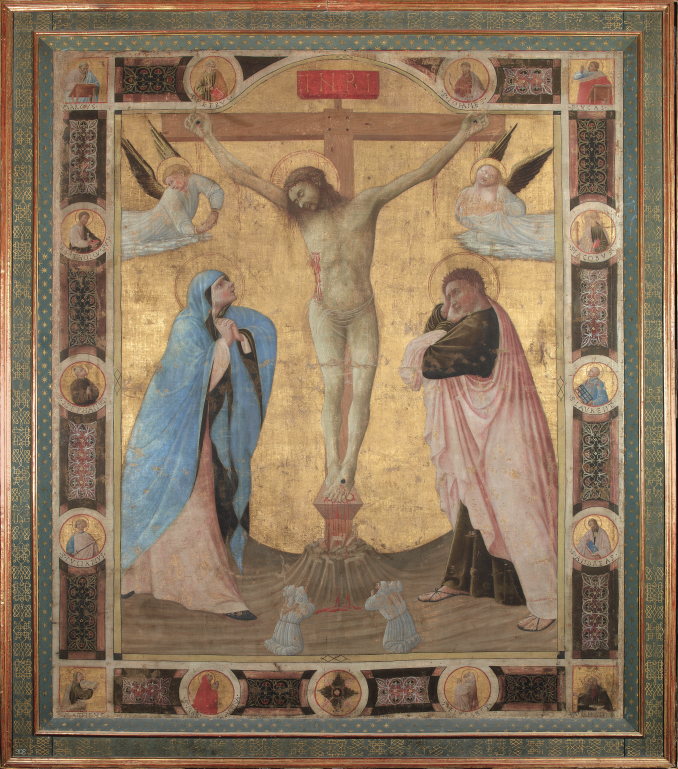
Fig. 3 – Pietro di Giovanni d’Ambrogio, front and back 1444, PROCESSIONAL BANNER of S. Caterina d’Alessandria, Musée Jacquemart-André, Parigi
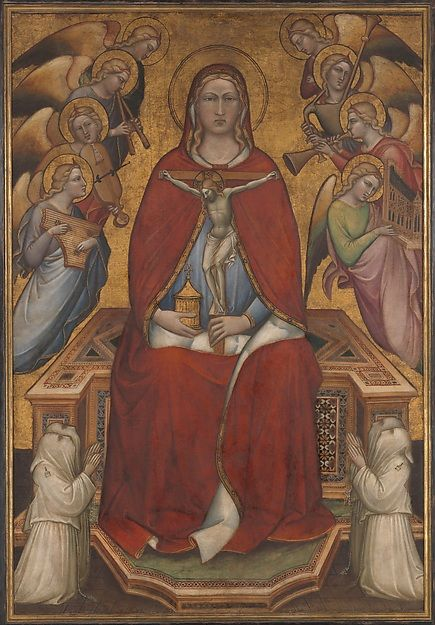
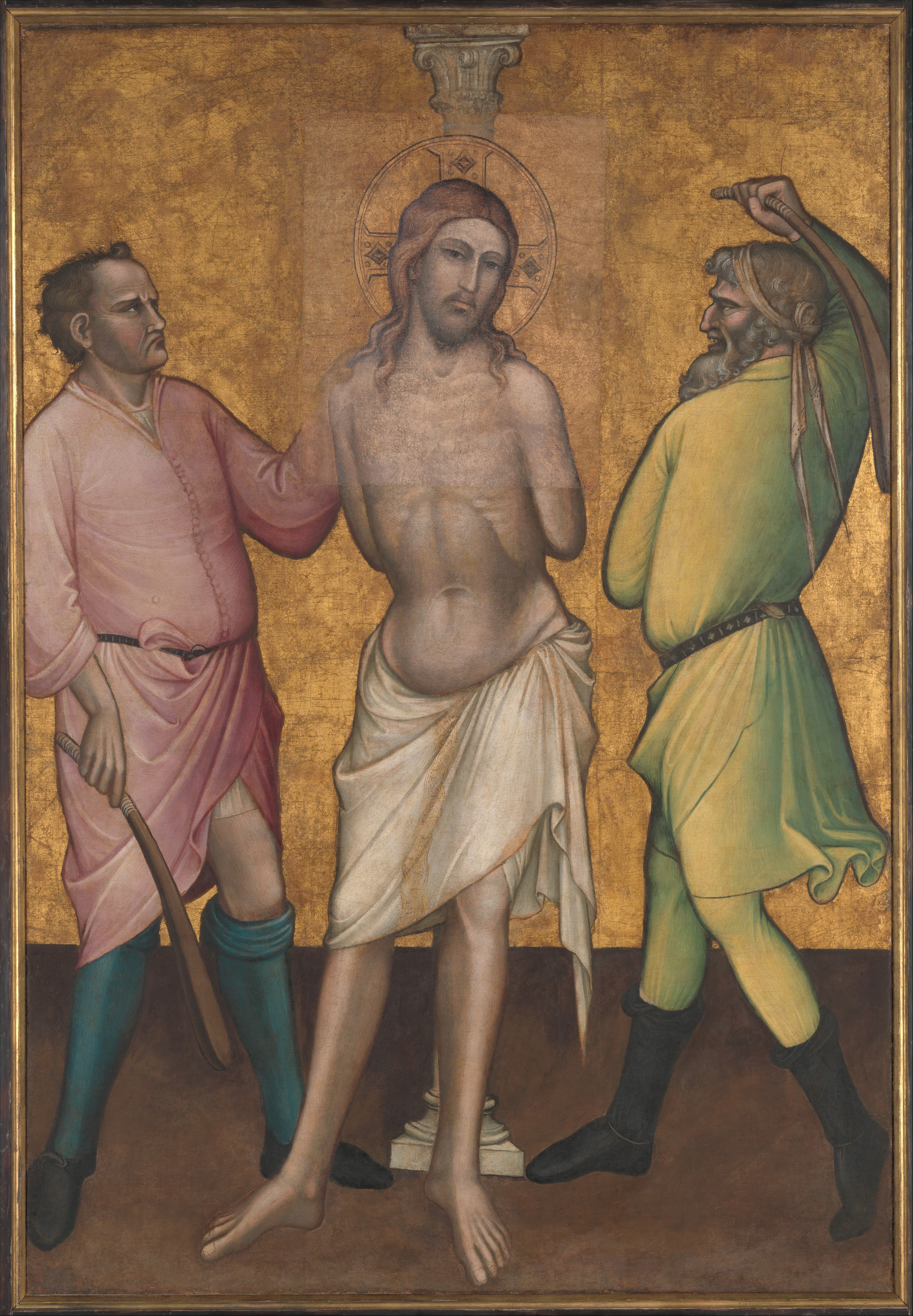
Fig. 4 – Spinello Aretino,front and back , 1395, Processional banner of Santa Maria Maddalena, Metropolitan Museum of Art di New York.
The work of Jacopo Vignali, a Florentine painter of the first half of the century, who left he Nativity of the Virgin, in the church of Sant’Agostino is no longer there . Santa Marta is a local church particularly dear to the inhabitants of the area. It is no coincidence that, inside above the entrance door, a twentieth-century painting depicts real characters, immortalized only out of affection for the church. The church is also loved for another reason: every year for Christmas a nativity scene of the same size as the church is built there, inspired by different environments and situations recreated in an excellent way. The main entrance of the church, in Via della Fortezza, leads us to a small and charming square overlooked by the church of Sant'Antonio Abate.
STREETS AND ALLEYS OF PORTA ROMANA
From the Porta Romana and Piazza di Santa Marta you take the main street of the town: the Via Maestra or the Corso, officially Via XX Settembre, in memory of the breach of Porta Pia in 1870 and the end of the state of the Church. The term Maestra attributes solemnity and importance to the road. It crosses the town to the other gate, the Fiorentina. The streets that merge into the Via Maestra, from the barrier of Porta Romana, are: Via della Fortezza: you can glimpse the staircase of the Fortezza on the right and the road then descends in front of Santa Marta to the small square of Sant'Antonio (and beyond). Via dei Tollentini (on the right, but the plaque has disappeared), a very short road – from the Corso to Via San Niccolò – which is also referred to as Via della Ventina in a map from 1828 and in one from 1856 reads Via dei Tollentini. A little further on, on the left, there is Via del Campaccio which continues, from Via XX Settembre, the Via della Fortezza. Angelo Tafi says that this was the name of the space created with the eastward expansion of the city for the construction of the Medici walls, which remained uncultivated. On the right Via Manzetti, evidently the surname of a family. Then the long road, to the right and left of the Corso, which is Via del Forno, formerly Via del Fosso, as mentioned on the sign. According to Tafi, in the past the northern stretch was called Via del Topo. Again, on the left, Via dei Cipolli, where a stone plaque was placed by the citizens to honor the memory of “Luca Pacioli”, born there in 1445, and died in 1517, scientist and mathematician – symbol of a civilization that in this city had high expressions in art and science – Sansepolcro 1994″. The Cipollis, the family to whom the street is dedicated, are confirmed in the papers of the diocesan archive.
On the right, almost opposite, is Via dei Bofolci, very short, from Via S. Niccolò to Via XX Settembre. Bofolci is one of the oldest families in Sansepolcro, they were feudal lords, lords of the Castello di Casale castle. In 1187 they were forced to destroy the castle and come to the city and build their palace there. Continuing, we find Via del Buon Umore or Buonumore (in the first case it seems to be a cheerful person; in the second it seems to be a psychological condition) which has a nice name and is beautiful because it is dominated by five arches which soften the street. This is the southern stretch, but the name also applies to the northern stretch. Via del Buon Umore or Good Humor. The stretch between Via XX Settembre and Via S. Niccolò was called Via Cupa.
3ERCOLE AGNOLETTI, Piccole storie, vol. II Arti Grafiche, Sansepolcro 1987.
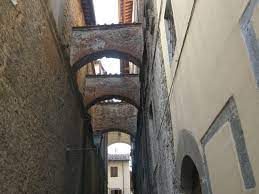
Fig. 5 – The small arches of Via del Buonumore
THEATRE OF THE ACADEMY OF THE RISEN
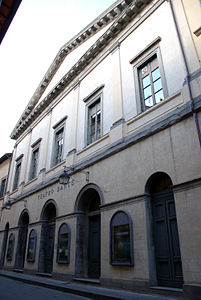
Fig. 6 – Theatre of the Academy of the Risen
Along the road, from the Roman gate to the square, there is the neoclassical theater of the Accademia dei Risorti (no longer existing) named after Dante Alighieri in 1886.
Among the most beautiful theaters in the region, that of Sansepolcro has a very respectable history. The origin, in fact, dates back to 1727 when the Accademia dei Risorti was born which carried out an almost exclusively theatrical activity; then in 1832, when the Risorti merged with the Riuniti - the cultural associations were in great turmoil under the reign of Leopold II - the project for the Dante Theater was born (which was inaugurated in 1834 with a Sonnambula by Vincenzo Bellini) more or less as it is today: horseshoe shape, very rounded, four tiers of boxes, a good stage with a narrow but functional pit for the orchestra, all for four hundred spectators. Thanks to continuous use and uninterrupted effective maintenance, the Dante Theater has maintained its original neoclassical charm, structures and functionality in over one hundred and sixty years of life, and continues to host theater and musical seasons of all levels.4
4https://it.wikipedia.org/wiki/Teatro_Dante_(Sansepolcro)
STUDY by GIULIANA MAGGINI